Qualifying the future of open-source automated driving.
We benchmark and qualify open-source automated driving software. Every result is reproducible and aligned with ISO 26262 & 21448, so OEM and Tier-1 teams can adopt it on evidence rather than assumption.
Open-source automated driving stacks are powerful, but without transparent benchmarking and qualification, industrial adoption remains slow and risky.
Regulators
Need auditable evidence for every component and the overall system.
Internal Procurement
Need documented qualification they can sign off on.
Program Leads
Need benchmarks they trust and can defend in a review.
We close that gap. Benchmarks run on your data, and qualification documentation that survives a review.
Why Now
The evidence bar is rising
2024
ISO/PAS 8800 published: safety and AI in road vehicles now has a dedicated standard.
2024–26
UNECE framework expands: ALKS (R157) amended, DCAS (R171) in force and under further amendment.
2026
UN R185 and UN GTR No. 26 adopted: the first global rules for fully driverless ADS.
EU AI Act transparency rules start applying.
2027–28
EU AI Act high-risk obligations phase in, Annex III from late 2027 and product-embedded AI from 2028.
What it means for type approval
Adopted by UNECE WP.29 on 24 June 2026, the framework sets the bar: an automated driving system has to be at least as safe as a competent and careful human driver. It opens two parallel routes to approval.
1958 Agreement
UN R185
A UN Regulation: international type approval with mutual recognition between contracting parties. Expected to be the route the EU builds on for driverless vehicles.
1998 Agreement
UN GTR No. 26
A global technical regulation: a common technical baseline that each contracting party transposes into national law, through type approval or self-certification.
In practice
Approval by evidence
Whether you build or buy, the questions are the same: where is the evidence, and can you reproduce it? Open-source components are no exception. They need the same qualification as anything else in your safety case.
How We Solve It
Discovery, evaluation, qualification
Automotive and robotics teams building on open-source software face one core challenge: regulators and OEM procurement teams want proof of systematic component evaluation. We make that proof possible, and repeatable.
Discover
We identify the right open-source components for your target application and compliance requirements, and map them against your existing stack.
Evaluate
We run reproducible benchmarks across real operating scenarios and safety conditions, testing performance and reliability on your data.
Qualify
We produce structured qualification documentation aligned with ISO 26262 & 21448 and relevant industry standards, ready for your internal sign-off or external audit.
Our Core Product
Autonomy.Hub
Our open-source ecosystem for evaluating automated driving software on ROS 2, from your module and your data to metrics-based evidence.
02 | Data
03 | Processing
04 | Evidence
01 | Configuration
Your module or full AD stack
Your data
Your deployment and ODD configuration
TestScene
Available
Autonomy.Datasets
Makes heterogeneous and fragmented data available for evaluation.
In development
Autonomy.Simulation
Runs large-scale scenario-based simulation, open or closed loop.
Autonomy.Benchmarks
Available
Autonomy.Evaluation
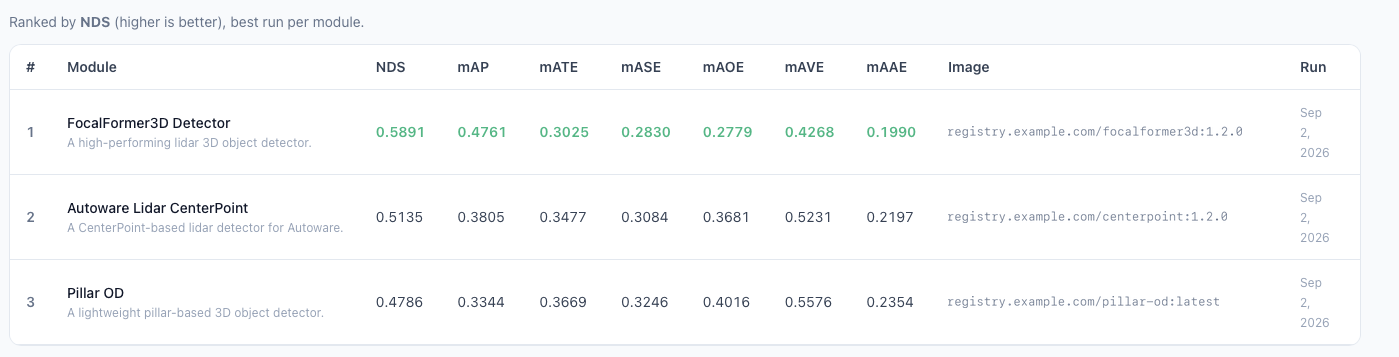
Applies reusable metrics across component-level and full-stack use cases.
Component-level example3D object detection
Full-stackCriticality assessment
VisualizationSee the results in a visual format.
ReportDetailed analysis of the benchmark results.
LeaderboardCompare the performance of different modules or systems.
In development
Autonomy.Bot
Orchestrates the complete benchmark chain in your CI/CD workflow.
Developed and validated on prototype vehicles under real operating conditions, not just in simulation. When we evaluate open-source modules, the methodology behind it has already been proven in the field.
Our Offer
Start small, scale with evidence
Three packages that build on each other. Start with a focused scouting engagement, then scale to full benchmarking and qualification.
Start here
Component Scouting
2–4 weeks | fixed price
Identification & mapping of suitable open-source components for your target application
Built on OpenADS using ROS 2 and Autoware compatible.
Every evaluation process fully documented and inspectable.
Scenario-based full-stack testing in simulation and on real data.
What Thinking Cars is not doing
Not overselling a public product that does not exist yet.
Not selling reports nobody can reproduce.
Not making claims we cannot back with evidence.
The People behind Thinking Cars
Built on deep domain expertise
The team comes out of autonomy research and software integration, and works on making open-source AD software trustworthy enough to build on.
Strategy and Technology
Dr.-Ing. Timo Woopen
CEO
PhD in collective learning for automated driving | led the UNICARagil project | responsible for strategy, offering, and customer projects.
Architecture
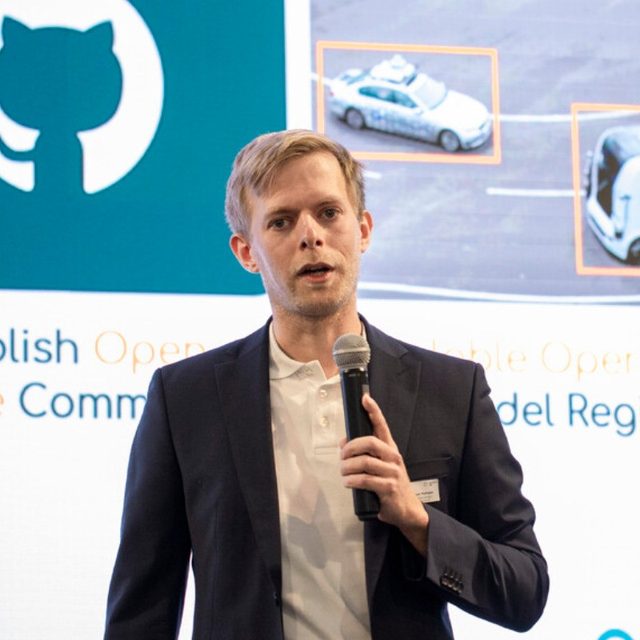
Raphael van Kempen
Lead Architect
PhD research in automated driving system architecture | led the autotech.agil project | responsible for the benchmark platform and project delivery.
Development
Dr.-Ing. Haohao Hu
Lead Developer
PhD in mapping for automated driving | responsible for benchmark logic, scenario design, and report quality.
Simulation
Christian Geller
Lead Simulation
PhD research in large-scale scenario-based simulation | responsible for the simulation environment and reproducible test execution.
Our Advisors
Strong network and decades of expertise in automated driving, bridging research and industry.
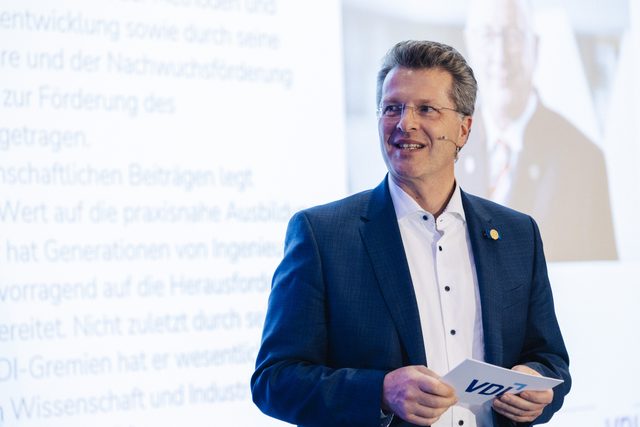
Prof. Dr.-Ing. Lutz Ecksteinika RWTH | VDI President
Our link into the OEM network and into industry policy.
Prof. Dr.-Ing. Christoph Stillermrt KIT | IEEE Chair (SDA-TC)
Has shaped automated driving research and evaluation methodology for decades.
Prof. Dr.-Ing. Klaus Dietmayermrm UULM
Sensor fusion and perception, and how to tell whether a stack really works.
Milestones
Our history and roadmap
2021Past
Foundation
Thinking Cars GmbH is founded out of Aachen, Karlsruhe, and Ulm to turn autonomy research and systems knowledge into customer-ready delivery and clearer software decisions.
2022Past
UNICARagil partnership
TC becomes a partner in the UNICARagil consortium, strengthening its position in the open-source automated driving space.
2022–2025
autotech.agil funding and first benchmark platform
TC joined the autotech.agil initiative and showcased a first reusable benchmark environment for structured software comparison.
2026 | Now
First open-source integration milestone
We joined the Ecosystem Mobility 4.0 initiative by the German Federal Ministry for Economic Affairs and Energy with our transparent evaluation approach. First pilot engagements are open, and we are onboarding a limited number of partners.
2027+
Open AD stack integration expands
The roadmap grows toward broader benchmarking integration, qualification logic, and delivery readiness for open-source automated driving software.
2028+
Open AD stack on the road
We form an ecosystem of well-evaluated open-source automated driving components, tested and qualified for real-world deployment.
Data & IP
Your data stays yours
Benchmarking on customer data only works with strict data discipline. Here is how we handle it.
01Do we need an NDA first?
Yes. NDA before any data or architecture details are shared. We use your template or ours.
02How does data hand-over work?
Via a secured data room you control, or the evaluation runs on your infrastructure and only results leave the building.
03Is our data used for anything else?
No. Evaluation pipelines are containerized per project; your data is never reused, shared, or used to improve anything else.
04What happens after the project?
Agreed retention period, then documented deletion. You keep the report, the methodology stays transparent.
We're onboarding a limited number of pilot partners in 2026, with early-partner conditions
in exchange for a joint reference. Start small: a focused component scouting, delivered in weeks,
shows what our evidence looks like before you commit to a full benchmark.